


Unveiling the narratives of survival, stigma, and gender
There’s a version of homelessness people are comfortable talking about, and then there’s the version they avoid. The one I lived didn’t look like sleeping on sidewalks every night or holding a sign on a corner. It looked like making decisions that didn’t feel like choices at all. As a homeless woman, survival sometimes meant doing what I had to do to get through the night, even if it meant stepping into roles that society is quick to judge and label. Escorting wasn’t something I grew up dreaming about. It was something that made sense in a world where my options were limited, my safety wasn’t guaranteed, and my survival depended on adapting quickly.
What stands out to me now isn’t just what I did, but how people respond to it. The moment a woman is associated with sex work, especially while homeless, she stops being seen as someone navigating impossible circumstances and becomes a label. That label carries assumptions, judgment, and distance. It shapes how others treat her, what opportunities she’s denied, and even how she begins to see herself. Looking back, I can see that my experience wasn’t just about individual decisions, but about larger systems of gender inequality and social stigma.
In this blog, I explore my experience through Feminist Theory and Labeling Theory. Feminist theory helps explain how gendered power structures and economic inequality shape the choices available to women, especially in vulnerable situations like homelessness. Labeling theory reveals how identities are constructed and reinforced through stigma, and how being labeled can impact a person long after the situation changes. By connecting these theories to my own story, I want to challenge the way we think about survival, judgment, and what it really means to navigate the world as a homeless woman.
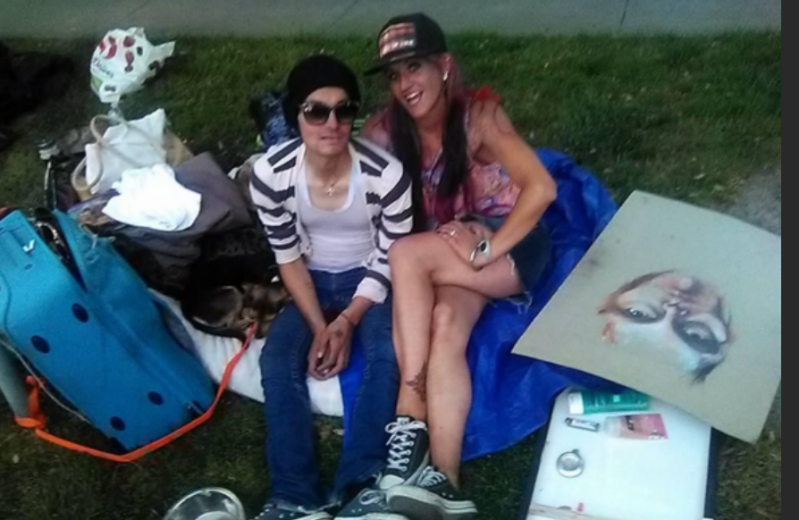

About me..
My name is Kaleena Christensen, and I am currently completing my Bachelor of Arts in Interdisciplinary Studies with a focus on sociology, psychology, and social work. My academic path reflects more than just coursework. It reflects lived experience. I am a member of Mortar Board, a national honors society that recognizes academic achievement, leadership, and service. I am also a mother, a mental health worker, and an active member of my church, where I participate in a ministry called the Brown Bag Project, which creates and distributes care packages to San Diego’s homeless population.
These roles are important to me, but they are only part of my story. About a year and a half ago, I was released from prison after being arrested in 2021. Before that, my life looked very different. I was living on the streets, struggling with addiction, and surviving however I could. As a homeless woman, that survival included escorting. At the time, it didn’t feel like a choice in the way people usually think about choices. It felt like a way to get through the day, to stay fed, and sometimes to stay safe.
My experiences shape how I understand gender, inequality, and social systems today. They also shape the work I do and the way I connect with others who are navigating similar challenges. This blog is not just an academic exercise for me. It is a space where my education and my lived experience meet, allowing me to explore gender through both a sociological lens and a personal one.
Create Your Own Website With Webador